The Ultimate Guide to Ball Valves and How to Choose Them | GEKO Valve
Oct 28, 2026
The Ultimate Guide to Ball Valves and How to Choose Them | GEKO Valve
Ball valves are among the most widely used quarter-turn fluid control devices across industrial piping systems. Known for fast operation, reliable sealing, low maintenance and compact structure, they serve critical isolation and flow regulation tasks in water treatment, oil & gas, chemical processing, power generation and many other sectors. This complete guide covers ball valve basics, common types, key specifications and practical selection rules to help you pick the right ball valve for your working conditions.
What Is a Ball Valve?
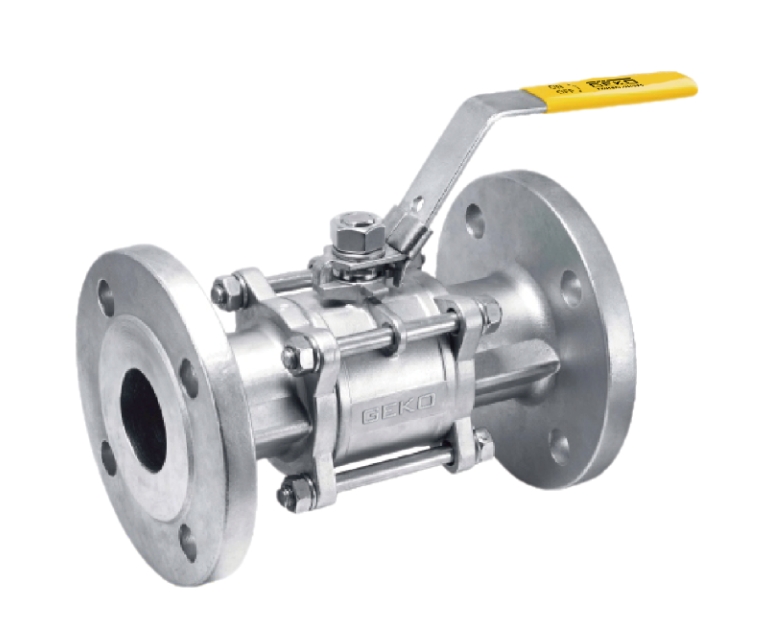
A ball valve uses a hollow, perforated rotating ball inside the valve body to control fluid flow. When the ball’s bore aligns with the pipeline, the valve opens and media passes through. Rotating the ball 90 degrees blocks the passage, shutting off flow. Most standard ball valves are designed for tight shut-off, though special designs support throttling service. GEKO Valve delivers a full lineup of ball valves built to deliver dependable sealing and long service life for industrial projects.
Common Types of Ball Valves
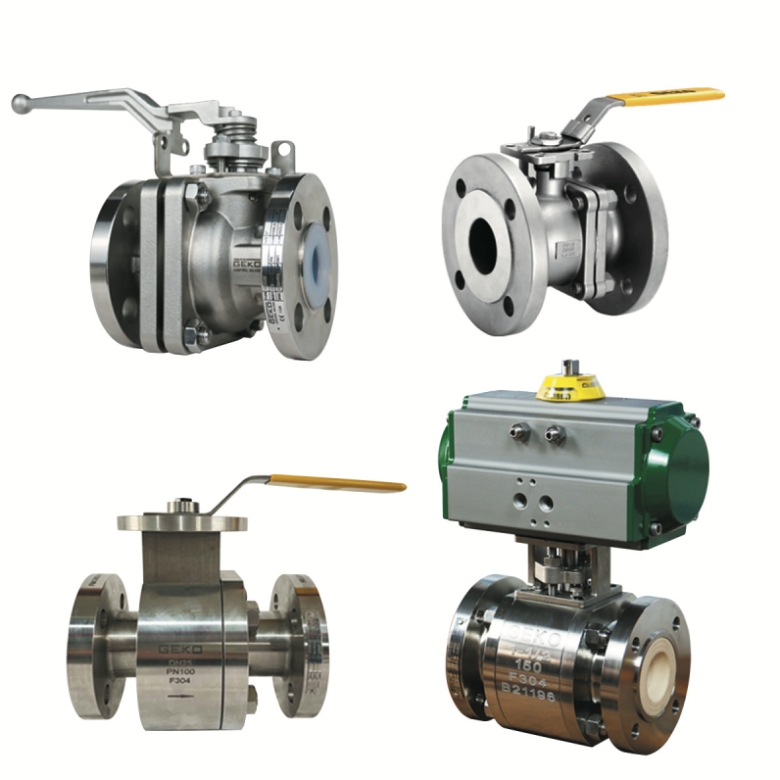
Floating Ball Valve – The ball is not fixed by upper and lower trunnions. Fluid pressure pushes the ball against the downstream seat to form a seal. Ideal for medium and low pressure applications, simple structure and cost-effective.
Trunnion Mounted Ball Valve – The ball is supported by fixed trunnions at top and bottom. Sealing force does not rely fully on line pressure. Suitable for high pressure, large size and heavy-duty industrial pipelines.
Top Entry Ball Valve – Maintenance can be carried out directly on site without removing the whole valve from the pipe. Preferred for critical pipelines where shutdown and disassembly are costly.
Side Entry (Split Body) Ball Valve – The body is split into two or more parts for easy assembly. Widely used for general industrial and water service.
Full Port vs Reduced Port Ball Valve – Full port ball valves have a bore size matching the pipe inner diameter, minimizing flow resistance and pressure drop. Reduced port ball valves feature a smaller bore, lower cost and compact size for non-critical flow loss scenarios.
Lined Ball Valve – Lined with PFA, PTFE or other corrosion-resistant materials, for handling strong acids, alkalis and aggressive chemical media.
Key Components of a Ball Valve
Valve Body: The main pressure-containing shell; common materials include WCB, A105, 304 stainless steel, 316 stainless steel, duplex steel and alloy steel.
Ball: The rotating closure member, available in stainless steel, carbon steel, hard-faced alloy for abrasive service.
Seat & Sealing Insert: PTFE, RPTFE, Viton, Devlon, metal seat for high temperature or fire-safe requirements.
Stem: Transmits torque from the handle or actuator to the ball; anti-blowout stem design is a standard safety feature on GEKO Valve ball valves.
Operator: Manual lever, gearbox, pneumatic actuator, electric motor operator (MOV) for automated control.
Main Industrial Applications
Oil and gas: wellhead isolation, pipeline transmission, refining and storage terminals
Chemical industry: corrosive chemical transfer, batch processing and reactor isolation
Water treatment: raw water, clean water, sludge and wastewater pipelines
Power plants: cooling water, steam auxiliary systems and compressed air lines
Food and beverage: sanitary ball valves for hygienic media
Hydrogen and clean energy: low-leakage ball valves for hydrogen storage and transportation
How to Choose the Right Ball Valve: Step-by-Step Checklist
1. Confirm Media Properties
Identify the fluid: water, oil, gas, acid, alkali, slurry or hydrogen. Corrosive media require stainless steel or lined construction. Slurry service needs hard-faced balls and wear-resistant seats to avoid abrasion damage. The technical team at GEKO Valve can assist with material matching for challenging media.
2. Working Pressure and Temperature
Match the valve pressure class (Class 150, 300, 600, 900 etc.) to your maximum operating pressure. Check temperature limits: soft seats work well at moderate temperatures, while metal-seated ball valves handle high temperature and fire-safe service.
3. Valve Size and Flow Requirement
Select full port if low pressure drop is essential. Reduced port is acceptable when flow loss is not a concern. Confirm connection ends: flange, threaded, butt weld or socket weld to match your piping.
4. Operation Type
Manual lever: simple, low cost, for infrequent operation
Gear operated: for large size or high torque valves
Pneumatic actuator: fast on/off, suitable for automatic control systems
Electric actuator: ideal for remote control and slow switching
5. Sealing and Safety Requirements
Soft seats provide bubble-tight shut-off for most general service. Metal-to-metal seats are selected for high temperature, fire-safe, abrasive or high cycling conditions. Fire-safe certification and low-emission stem packing are available for hazardous media.
6. Industry Standards
Common standards include API 6D, ASME B16.34, ISO 17292. Confirm whether you need special tests such as fugitive emission test, hydrostatic test and cryogenic test.
Advantages and Limitations of Ball Valves
Advantages
90-degree quick open and close, easy operation
Excellent tight shut-off performance
Simple structure, fewer wearing parts, long service life
Wide range of material options for different media
Limitations
Standard soft-seated ball valves are not recommended for continuous heavy throttling
High temperature may degrade soft seat materials
Trunnion and large-size ball valves come with higher cost
Final Selection Tips
Never choose a ball valve only by nominal size and pressure rating. Always evaluate media corrosion, temperature cycling, actuation frequency and safety codes. If you work with hazardous or high-value media, prioritize certified low-leakage and fire-safe designs. For long-term reliability, match body, ball and seat materials as a complete set rather than mixing incompatible materials. Reach out to GEKO Valve for technical support when you are unsure about your selection.
Conclusion
Ball valves are versatile, dependable fluid control components, but proper selection directly determines system safety and service life. This guide walks you through core types, construction, application scenarios and critical selection criteria. When you clarify your media, pressure, temperature, operation mode and standard requirements, you can efficiently narrow down the correct ball valve model for your piping project.
Target Keywords
GEKO ball valve, trunnion ball valve, floating ball valve, stainless steel ball valve, PTFE seat ball valve, fire safe ball valve, full port ball valve, industrial ball valve, low emission ball valve
阅读更多






 电子邮件
: info@geko-union.com
 电子邮件
: info@geko-valves.de
 电子邮件
: tw@geko-union.com
 电子邮件
: nl@geko-union.com

 支持 IPv6 网络