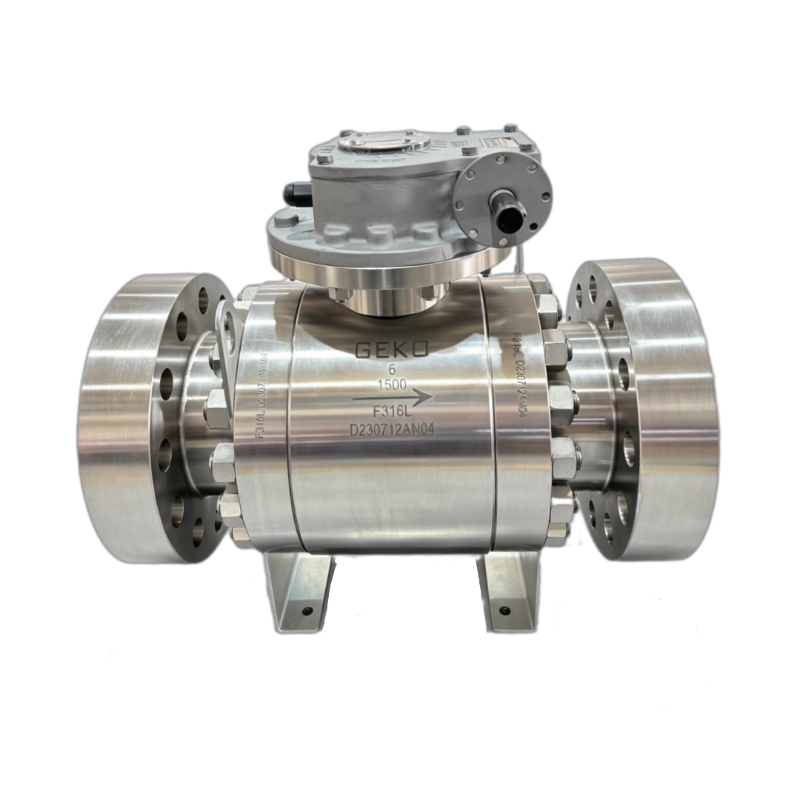
SS316 Trunnion Mounted Stainless Steel Ball Valve

主页

SS316 Trunnion Mounted Stainless Steel Ball Valve

  • Top Features to Consider Before Ordering Stainless Steel Ball Valves
    Top Features to Consider Before Ordering Stainless Steel Ball Valves
    Aug 11, 2026
    Top Features to Consider Before Ordering Stainless Steel Ball Valves Stainless steel ball valves rank among the most widely used isolation and shut-off components in corrosive process pipelines, water treatment, food & beverage, pharmaceutical, marine and cryogenic industrial systems. However, simply specifying “stainless steel ball valve” is far from sufficient to match actual operating conditions. Different stainless steel grades, body construction, bore type, sealing configuration, end connections, actuation compatibility and pressure-temperature ratings directly determine corrosion resistance, leak tightness, service life and overall project compliance. This comprehensive checklist breaks down all non-negotiable technical features buyers and design engineers must verify before placing orders for stainless steel ball valves, including multiple industry aliases, material grade differences and hidden specification pitfalls to avoid costly rework and on-site failure. 1. Confirm Exact Stainless Steel Body Grade (Most Critical Core Feature)   The first and most decisive factor is the alloy grade of the valve pressure-containing body. Generic “stainless steel” covers multiple material standards with drastically different anti-corrosion performance, temperature tolerance and chemical compatibility. SS304 Stainless Steel Ball Valve: Also called 304 SS ball valve, A182 F304 ball valve. Universal anti-rust grade for clean water, weak alkaline solutions, atmospheric environments and general non-chloride media. Cost-effective for conventional light industrial pipelines. SS316 Stainless Steel Ball Valve: Alternative names: 316 SS ball valve, A182 F316 ball valve, molybdenum-bearing stainless steel ball valve. Added molybdenum element delivers superior resistance to chloride ions, saltwater, mild acids and chemical solvents. The preferred grade for chemical plants, coastal installations and wastewater treatment systems. 316L Low Carbon Stainless Steel Ball Valve: Low-carbon variant of 316, optimized for welding applications to prevent intergranular corrosion, commonly used in butt-weld process piping. 310S High Temperature Stainless Steel Ball Valve: Heat-resistant stainless steel for high-temperature flue gas, hot oil and thermal cycling working conditions. Never substitute SS304 for SS316 in chloride-rich media such as brine, seawater or disinfected water; pitting corrosion and through-wall leakage will occur within short-term operation. 2. Valve Body Construction Style & Internal Structure Stainless steel ball valves are manufactured in several body designs, each with unique maintenance and installation advantages: Three Piece Stainless Steel Ball Valve: Split three-body construction, easy inline disassembly for seat replacement and internal cleaning without cutting the whole pipeline. Ideal for sanitary, food-grade and frequently maintained equipment. Two Piece Stainless Steel Ball Valve: Compact integrated two-body structure, stable sealing performance, mainstream choice for flanged and screwed industrial piping. One Piece Stainless Steel Ball Valve: Monoblock forged body, minimal external leakage risk, mostly applied for small-bore threaded instrument lines. Also clarify the ball support mechanism: floating stainless steel ball valve for DN15–DN150 medium pressure service, and trunnion mounted stainless steel ball valve for large bore, Class 600+ high-pressure heavy-duty applications. 3. Full Port vs Reduced Port Bore Configuration Refer to the flow passage specification you confirmed in previous selection guides, both bore types have multiple industry aliases: Full Bore (Full Port / Through Bore) Stainless Steel Ball Valve: Matches pipeline inner diameter, ultra-low pressure drop, supports pigging, suitable for high-flow, slurry and cryogenic fluid transfer. Reduced Bore (Reduced Port / Restricted Orifice) Stainless Steel Ball Valve: Narrow internal opening, smaller operating torque, lower material cost, perfect for auxiliary branch lines, sampling points and instrument air circuits. 4. Seat & Sealing Material Compatibility Stainless steel body cannot guarantee zero leakage; the seat material dictates sealing lifespan under different temperature and media: PTFE / RPTFE Soft Seat Stainless Steel Ball Valve: Bubble-tight shut-off for normal temperature clean fluids, food and sanitary service. PEEK Seat Stainless Steel Ball Valve: High wear-resistant seal for media containing fine solid particles and moderate temperature cycling. STL Stellite Hardfaced Metal Seated Stainless Steel Ball Valve: Overlay welding hard alloy sealing surface, withstands high temperature, high pressure and abrasive viscous media, fire-safe compliant for flammable fluids. 5. Pipe End Connection Type Matching Piping Layout Verify connection ends to align with on-site welding or assembly methods, standard stainless steel ball valve end types include: Flanged stainless steel ball valve (RF raised face flange, most common for large industrial pipelines) NPT Threaded stainless steel ball valve (female thread for small bore instrument piping) SW Socket Weld stainless steel ball valve (socket welding for compact high-pressure assemblies) BW Butt Weld stainless steel ball valve (full penetration welding for critical high-pressure process lines) Sanitary Tri-Clamp stainless steel ball valve (hygienic clamp connection for dairy, beverage and biopharmaceutical industries) 6. Pressure Class, Temperature Range & Compliance Certifications Check pressure rating first: Class 150, Class 300, Class 600 ANSI pressure classes, or PN16, PN25, PN40 DIN pressure grades. Confirm continuous operating temperature upper and lower limits, especially for cryogenic stainless steel ball valves used in LN2, LNG and low-temperature gas systems. Mandatory certifications for global projects: ISO 9001 quality certificate, CE PED directive for EU market, fire-safe certification, material MTR test report, and API 6D standard for oil & gas export orders. 7. Manual or Automated Actuation Requirements Decide operation mode before ordering to avoid later modification troubles: Manual stainless steel ball valve with lever handle or gear operator for infrequent on-site operation Pneumatic actuated stainless steel ball valve for remote automatic on/off control Electric motorized stainless steel ball valve for long-distance centralized DCS system control 8. Special Customized Functional Add-ons List special requirements if applicable: - Anti-static device for explosive hazardous gas service - Blow-out proof stem safety structure - Locking handle to prevent accidental misoperation - Drain & vent bypass fittings for double block and bleed (DBB) function Common Ordering Mistakes to Avoid Only write “stainless steel ball valve” without specifying 304 or 316 grade, leading to wrong material delivery Choose reduced bore type for main high-flow process lines, causing excessive system pressure loss Equip PTFE soft seats for high-temperature steam or abrasive slurry, resulting in rapid seal failure Ignore certification documents required for overseas bidding and inspection Conclusion Ordering qualified stainless steel ball valves is a systematic specification work covering stainless steel alloy grade (304, 316, 316L, 310S), body split structure, bore size, sealing material, end connection, pressure-temperature rating, certifications and automation accessories. Clarifying every feature in the RFQ eliminates miscommunication between buyers and manufacturers, ensures long-term stable valve performance and cuts down unnecessary maintenance costs throughout the equipment lifecycle. GEKO Valve supplies a full lineup of customized stainless steel ball valves in SS304 and SS316 grades, floating/trunnion designs, full/reduced bore options, multiple end connections and soft/hard sealing configurations to serve water treatment, chemical, marine, food processing, power and cryogenic industrial applications worldwide.  
    阅读更多

留言

留言
如果您对我们的产品感兴趣并想了解更多详细信息,请在此处留言,我们会尽快回复您。
提交

主页

产品

接触