Butterfly valves are indispensable quarter-turn flow control components widely deployed in municipal and industrial piping systems. To properly select, operate, and maintain butterfly valves, it is essential to fully understand their working principles. Unlike ball valves that rely on spherical ball rotation or gate valves with vertical lifting structures, butterfly valves adopt a unique disc rotary working mechanism. This article systematically explains the basic working principle, structural working logic, sealing principle, throttling principle, and working differences of different butterfly valve types, providing professional technical support for industrial pipeline design and valve application.
1. Basic Working Principle of Butterfly Valves
The fundamental working principle of a butterfly valve depends on 90-degree quarter-turn rotary motion of the internal disc. The valve stem drives the disc to rotate horizontally within 0° to 90°, realizing the switching and flow adjustment of the fluid pipeline. The entire working process is simple, efficient and fast, without complex mechanical transmission structure.
Fully Open State (90°): When the disc rotates parallel to the fluid flow direction, the flow channel is fully opened. The fluid passes through the valve body with minimum flow resistance, ensuring high-flow pipeline transmission efficiency.
Fully Closed State (0°): When the disc rotates perpendicular to the fluid direction, the disc surface closely fits the valve seat. The flow channel is completely blocked to realize reliable pipeline isolation and fluid cut-off.
Throttling State (1°–89°): The disc can stay at any intermediate angle. By changing the overlapping area between the disc and the flow channel, the valve precisely controls fluid flow rate, medium velocity and pipeline pressure, achieving stable throttling regulation.
2. Structural Working Principle: How Core Components Work Synergistically
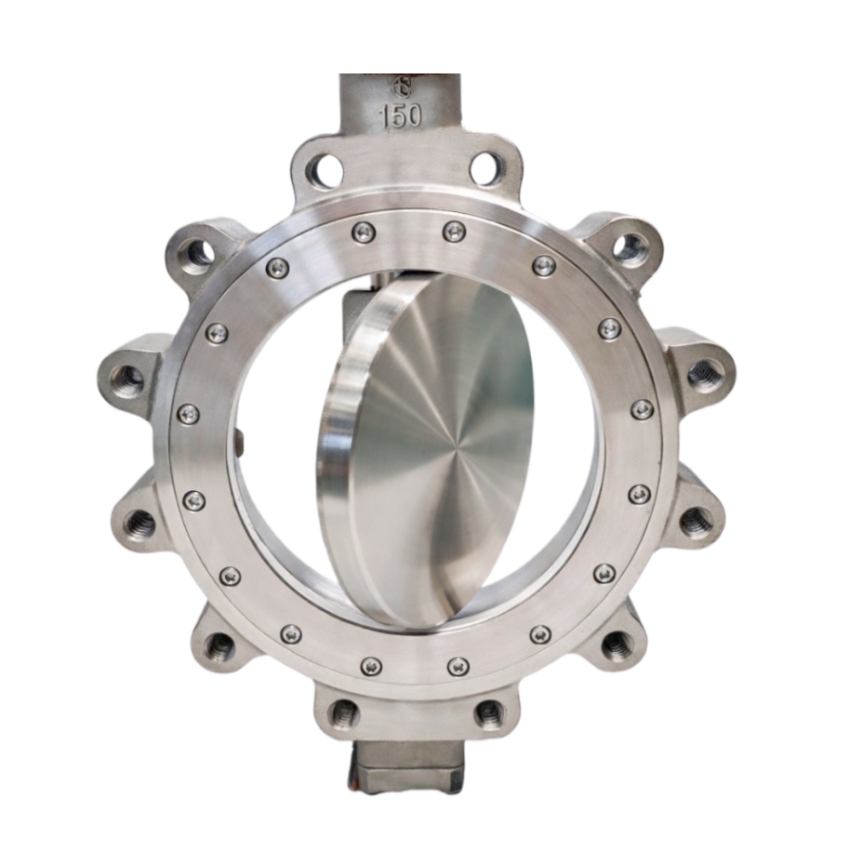
The stable operation of butterfly valves relies on the coordinated work of multiple core components. Each part has an independent functional principle and forms a complete fluid control system:
-
Valve Stem Transmission Principle: As the torque transmission core, the valve stem connects the actuator and the disc. It converts manual, pneumatic or electric rotational torque into disc rotation power, ensuring synchronous and accurate angle switching.
-
Disc Flow Control Principle: The streamlined disc is the executing component for fluid control. Its rotation angle directly changes the flow cross-section, realizing linear adjustment of pipeline flow and pressure.
-
Valve Body Positioning Principle: The valve body provides stable installation support and pressure-bearing protection. It fixes the stem and seat position, ensuring the disc fits accurately during closing and avoids positional deviation affecting sealing performance.
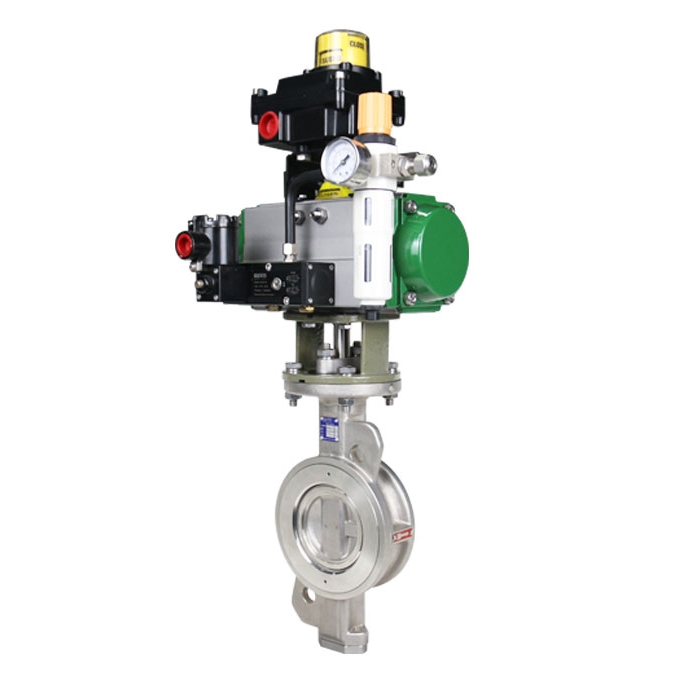
3. Sealing Working Principle of Butterfly Valves
Sealing performance determines the shutoff reliability of butterfly valves. According to different sealing structures, the working principles are divided into soft sealing and metal hard sealing, adapting to different industrial working conditions:
3.1 Soft Seal Sealing Principle
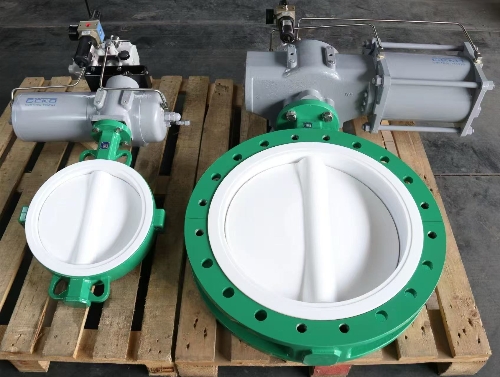
Soft seated butterfly valves adopt elastic materials such as EPDM, NBR and Viton as sealing seats. When the valve is closed, the disc squeezes the elastic seat to produce micro deformation, filling the tiny gap between the disc and the seat. This elastic compression sealing principle enablesbubble-tight zero leakage, suitable for normal-temperature, low-pressure clean media such as water and air.
3.2 Metal Hard Seal Sealing Principle
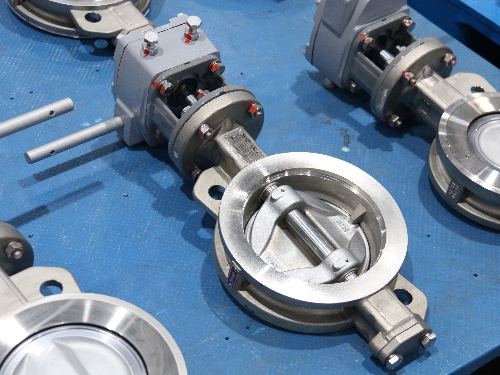
Metal seated butterfly valves adopt metal-to-metal hard sealing pairs with alloy hard-facing treatment. Relying on precise machining and high-precision lapping, the metal disc and metal seat achieve rigid close fitting. This mechanical compression sealing principle is not affected by high temperature and medium corrosion, realizing stable sealing in high-temperature, high-pressure and abrasive harsh working conditions.
4. Working Principle Differences: Concentric vs Offset Butterfly Valves
Concentric and offset butterfly valves have essential differences in working operation logic, which directly affects service life and pressure resistance:
4.1 Concentric Butterfly Valve Working Principle
The stem center, disc center and pipeline center coincide completely. During rotation, the disc continuously rubs against the seat surface. The structure is simple and cost-effective, suitable for conventional low-pressure and normal-temperature working scenarios with low switching frequency.
4.2 Double & Triple Offset Butterfly Valve Working Principle
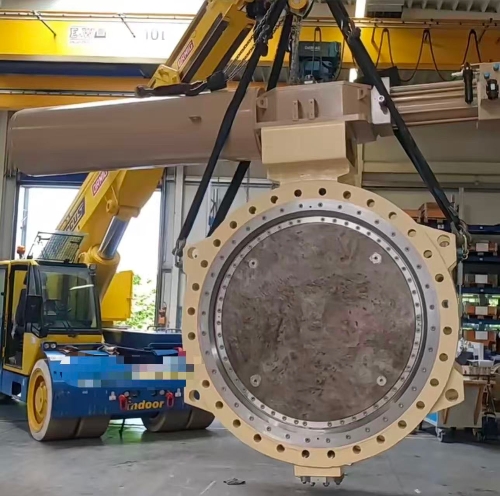
Through unique offset structural design, the disc automatically separates from the seat surface at the initial stage of rotation and contacts the seat only at the final closing moment. This zero-friction rotation principle eliminates seat wear, greatly improves pressure resistance and high-temperature resistance, and is suitable for heavy-duty industrial working conditions with frequent switching.
5. Actuation Working Principle of Automated Butterfly Valves
Different actuation modes provide diversified working control logic for butterfly valves, meeting manual and automatic industrial control needs:
-
Manual Operation Principle: Drive the gear or stem through lever or handwheel, output artificial torque to control disc rotation, applicable for low-frequency on-site operation.
-
Pneumatic Operation Principle: Use compressed air to push the actuator piston, convert air pressure energy into rotational mechanical energy, realizing fast valve switching with excellent explosion-proof performance.
-
Electric Operation Principle: The electric motor outputs precise torque and angle control, supporting remote signal linkage and proportional adjustment, realizing intelligent automatic pipeline control.
6. Working Characteristics and Industrial Application Value
Based on the unique quarter-turn rotary working principle, butterfly valves feature fast response, small flow resistance adjustment, compact structure and wide working condition adaptability. They not only meet conventional pipeline isolation requirements but also achieve accurate flow throttling that traditional gate valves cannot realize. With reliable working performance, they are widely used in water treatment, HVAC, fire protection, chemical, power and environmental protection industries.
7. GEKO Valve High-Performance Butterfly Valve Technology
GEKO Valve strictly optimizes the structural design and working mechanism of all butterfly valves. Our concentric and triple offset butterfly valves adopt precision casting and mirror lapping technology, ensuring flexible rotation, accurate angle control and stable sealing performance. Diversified actuation and sealing configurations fully match different industrial working principles and application requirements, providing long-term stable fluid control solutions for global industrial pipeline systems.
9 Core SEO Keywords: Industrial Butterfly Valve Working Principle, High Performance Butterfly Valve, Offset Butterfly Valve, Zero Leakage Butterfly Valve, Quarter Turn Industrial Valve, Butterfly Valve Sealing Mechanism, Heavy Duty Butterfly Valve, Automated Butterfly Valve, Flow Regulating Butterfly Valve






 电子邮件
: info@geko-union.com
电子邮件
: info@geko-union.com
 电子邮件
: info@geko-valves.de
电子邮件
: info@geko-valves.de
 电子邮件
: tw@geko-union.com
电子邮件
: tw@geko-union.com
 电子邮件
: nl@geko-union.com
电子邮件
: nl@geko-union.com

 支持 IPv6 网络